
Česká verze článku zde.
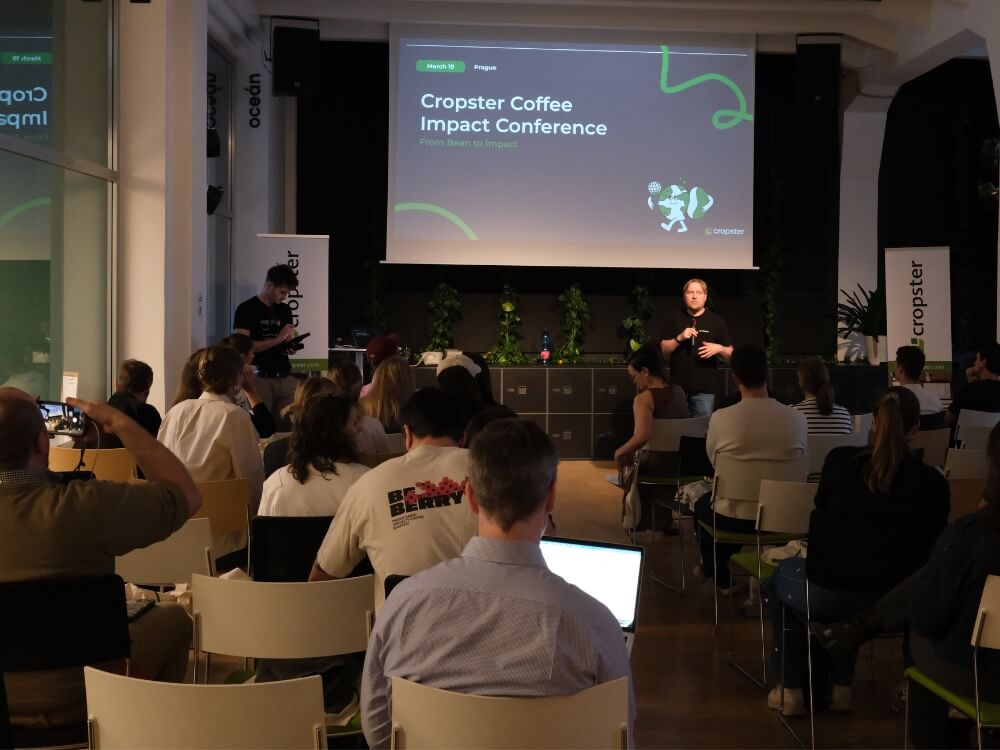
At the end of March, the From Bean to Impact conference took place in Prague under the Cropster. Cropster is a technology company that develops software for managing and optimizing operations across the entire coffee supply chain—from farm to café. The conference featured a series of inspiring workshops, tastings, and “TED-style talks”.
What is the EUDR up to?
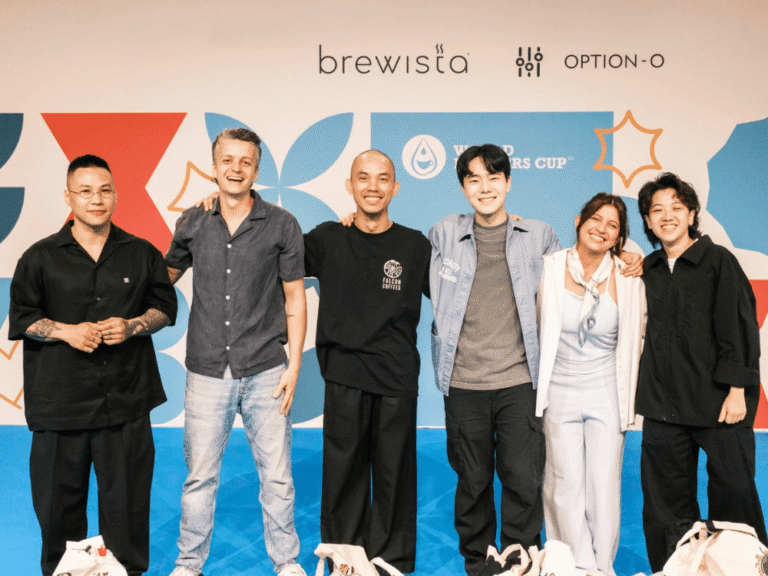
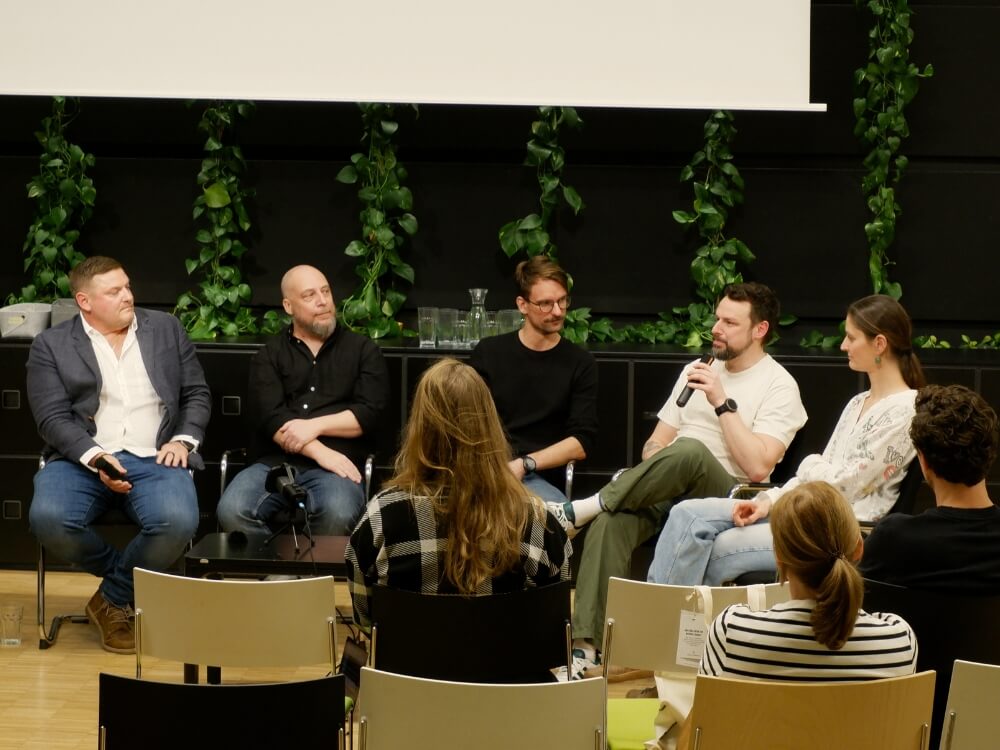
One of these formats was the discussion workshop I led, titled “From Farm to Coffee under EUDR”. In it, Norbert Niederhauser from Cropster and I attempted to demystify the EUDR regulations. These regulations are fundamentally transforming the way coffee is traded today. We discussed what this regulation actually means in practice—and where it clashes with reality.
We’ve already written about the EUDR in another Czech article, which we recommend you read—you can find it here.
The EUDR’s fundamental goal is actually quite straightforward: to prevent products linked to deforestation from entering the European market. However, as Norbert points out, this is not a simple “green” measure. “It is primarily a nature conservation tool, but its implementation is purely technical. Without traceability, we don’t know where a product comes from—and without that, we can’t manage it,” he says.
It is precisely this emphasis on traceability that is changing the game. Coffee is no longer supposed to be simply “from Colombia” or “from Ethiopia,” but from a specific location defined by a polygon on a map. However, this raises a whole host of practical problems. “It’s much more complicated than it seems,” says Norbert.
It’s already difficult today to trace coffee down to the farm level. With the EUDR, we’re trying to be even one level more specific.
Source: Cropster archive
Implementation in Practice
The differences between individual countries highlight just how unevenly this transition will unfold. While major producers like Brazil have the technological and financial resources, elsewhere—typically in Ethiopia—implementation could take years.
This creates a real risk that some coffees will simply disappear from the European market.
Not because they fail to meet environmental standards, but because they will fail to meet the administrative ones.
Nevertheless, it is interesting to note the strong consensus within the industry regarding the principle itself. From farmers to exporters to roasters, a similar sentiment is expressed: the rationale makes sense, but the problem lies in the implementation. As one member of the audience aptly put it:
No one disputes the „why“; everyone is focused on the „how“.
At the same time, the EUDR opens up a topic that has long been on the periphery of the coffee industry: the value of data. For the system to work, farmers must provide detailed information about production, soil, and processes. And this is precisely where Norbert sees the potential for change. “Farmers today provide a huge amount of data—but they usually get nothing out of it. That has to change. Data has value, and that value should stay with them.”
Apparent and Real Risks
From a pricing perspective, regulation may not be the main concern. The coffee market is already extremely unstable, and the climate itself plays a much bigger role than legislation. “The EUDR isn’t what will drive up prices. What’s driving them up is climate uncertainty,” says Niederhauser, adding that if production could be stabilized, greater transparency could actually have a positive long-term effect.
The question remains: what will happen to coffee that doesn’t meet the requirements? In the short term, it will likely end up in other markets, but that may not be the end of the story. The European market is large enough to set standards globally. “The EU isn’t the only market, but it’s a big one. And if the big players set processes for Europe, there’s a good chance they’ll carry them over elsewhere,” he notes.
Source: Cropster archive
Perhaps the biggest weakness of the entire regulation so far is not its content, but the way it is communicated. “The EUDR has been in effect for more than two years, and many people still don’t really know about it. That’s a problem. We need to talk about it more,” Norbert points out. This is confirmed by my opening question from the workshop—most of the attendees only learned about the EUDR at the conference or just before it—and these were all baristas, roasters, or shop owners, i.e., people directly affected by it.
Despite all the complications, however, Norbert’s perspective remains surprisingly level-headed. It’s not a perfect solution—and it never will be. But the important thing is to get started. “It’s not perfect. It never will be. But we have to start. And then gradually improve it.”
Our editorial team was delighted to serve as a media sponsor for the From Bean to Impact conference.